

Festival, Cannes Lions, MIPIM, summer on the Croisette : in Cannes, seasonal rentals can be far more lucrative than traditional long-term rentals. But since the Le Meur law, the rules have changed: less favorable tax treatment, energy performance certificates, registration, and stricter penalties. Here's what every landlord needs to know in 2026 to rent out their property with complete peace of mind.
Why does Cannes attract so many seasonal renters?
Few cities in France offer such a packed calendar as Cannes. In addition to the summer months, major international events take place: MIPIM in March, the Cannes Film Festival in May, the Cannes Lions in June, the Yachting Festival in September, and MIPCOM in October. During these periods, demand skyrockets, and prices rise accordingly.
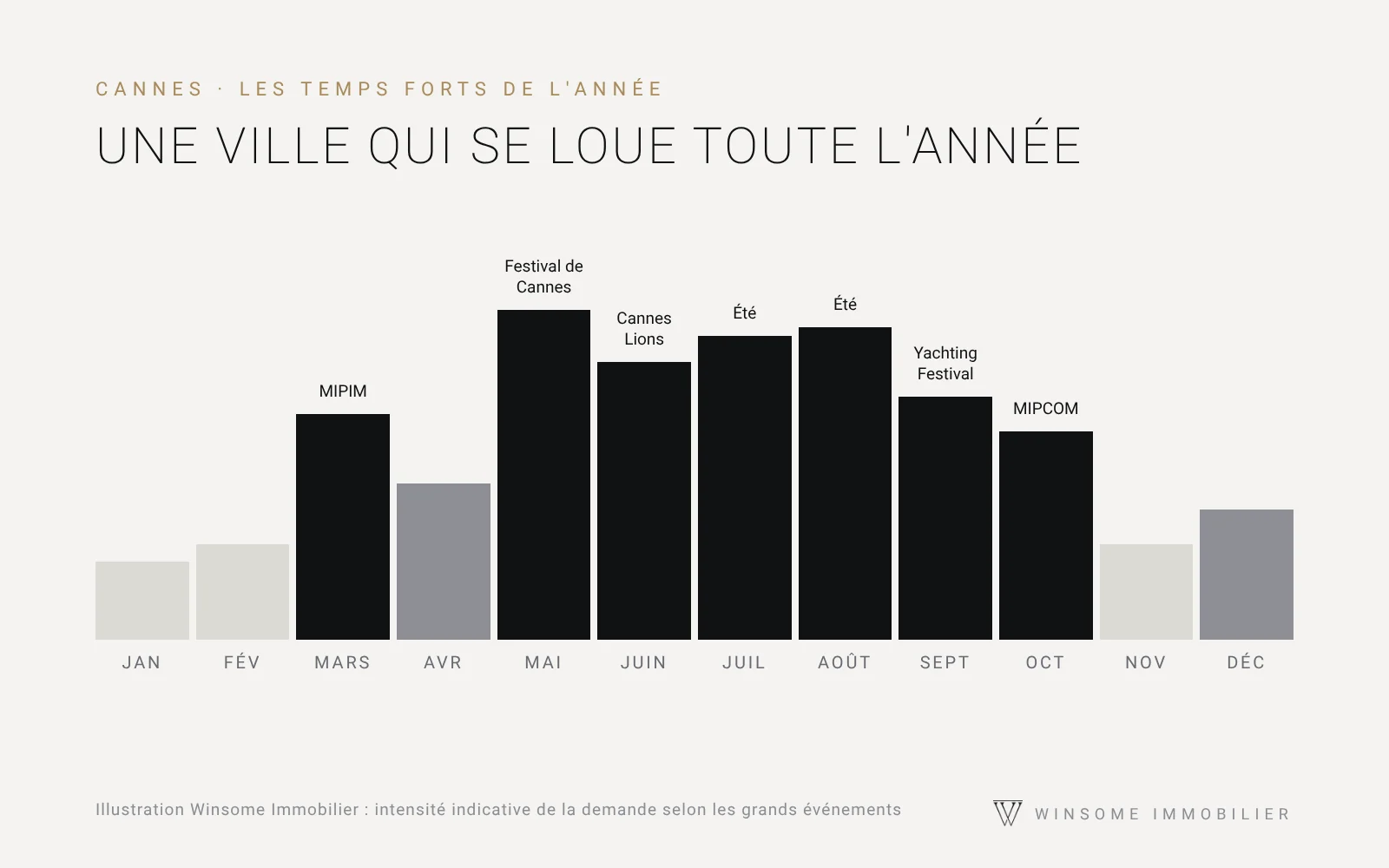
The result: a well-located apartment, near the Croisette or the Palais des Festivals, can be rented for a good part of the year. However, it's essential to comply with increasingly stringent regulations. To get an idea of your property's value, see also our article on real estate prices in Cannes in November 2026 .
Rules to follow before renting
In Cannes, all furnished tourist accommodations must be registered with the town hall : the city implemented this registration number on June 1, 2018, and it must appear on every listing, regardless of the platform. A national online registration service is also planned by the government for the end of 2026.
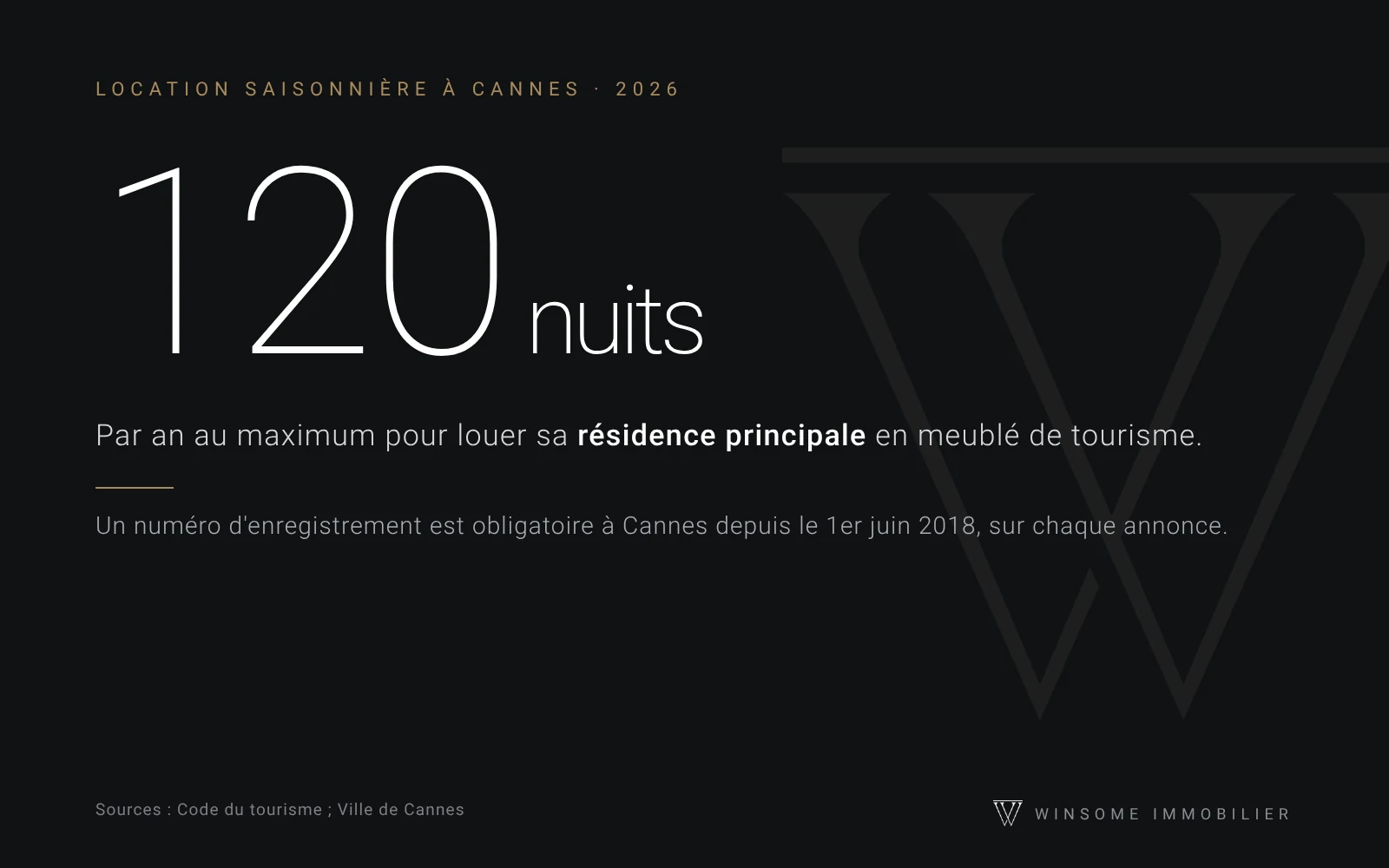
When it concerns your primary residence , rentals are limited to 120 nights per year , across all platforms. Municipalities may lower this limit to 90 nights: check with your local town hall before setting your dates.
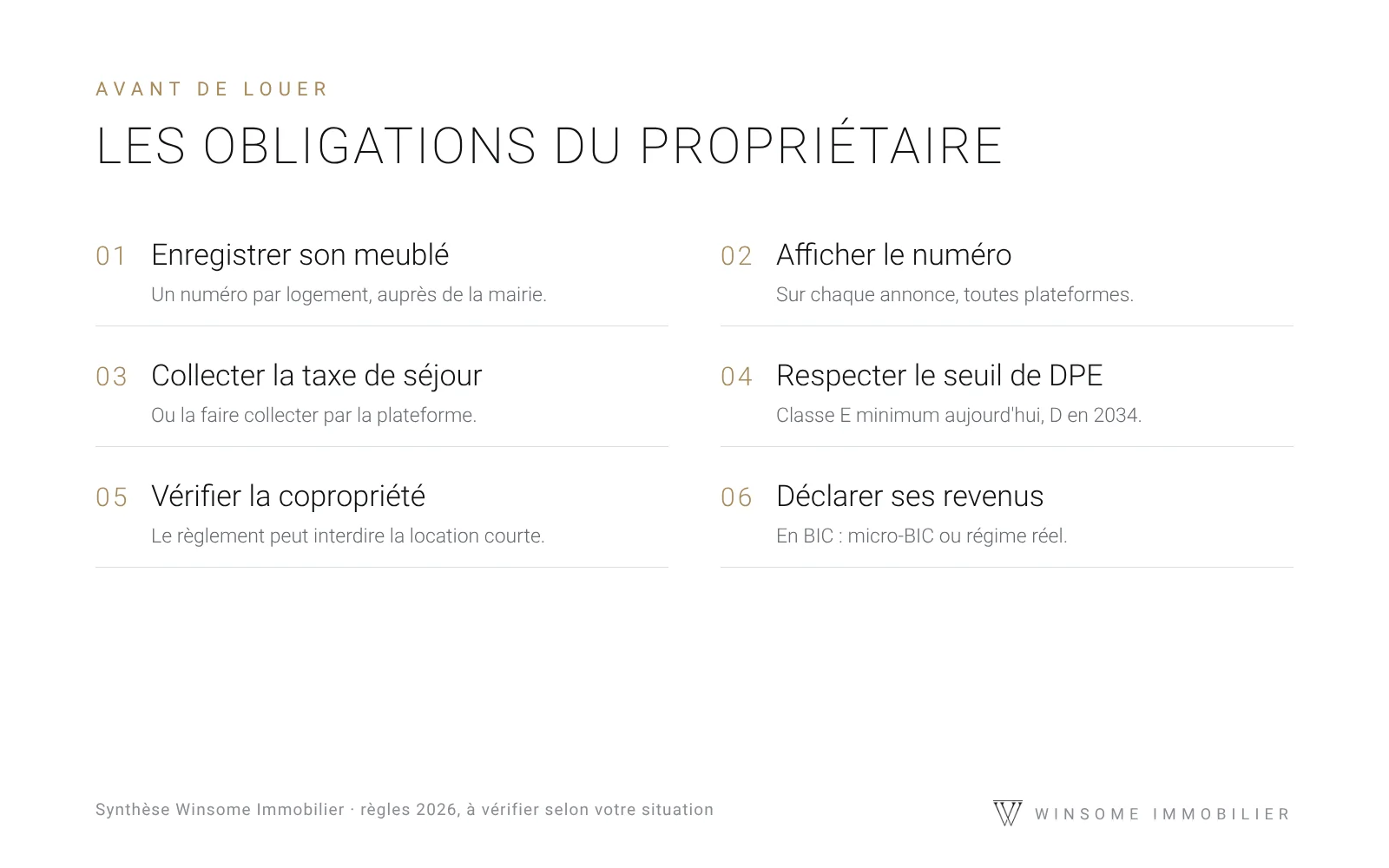
Finally, consider the condominium regulations : the Le Meur law makes it easier to prohibit tourist rentals in buildings, and some regulations already limit them. It's best to check them before buying a property intended for seasonal rental.
The city of Cannes also announced in 2025 its intention to further regulate tourist rentals in the most sought-after neighborhoods, notably through quotas. Specific details should be verified with the town hall when planning your project.
Taxation: what the Le Meur law changes
This is the most significant change for property owners. Starting with income earned in 2025, the micro-BIC tax regime is considerably less advantageous:
- Unclassified furnished tourist accommodation: 30% reduction (compared to 50% previously), up to a limit of €15,000 in revenue per year (compared to €77,700).
- Classified furnished tourist accommodation: 50% reduction (compared to 71%), up to a limit of €77,700 in revenue for 2025, then €83,600 for 2026 (compared to €188,700).
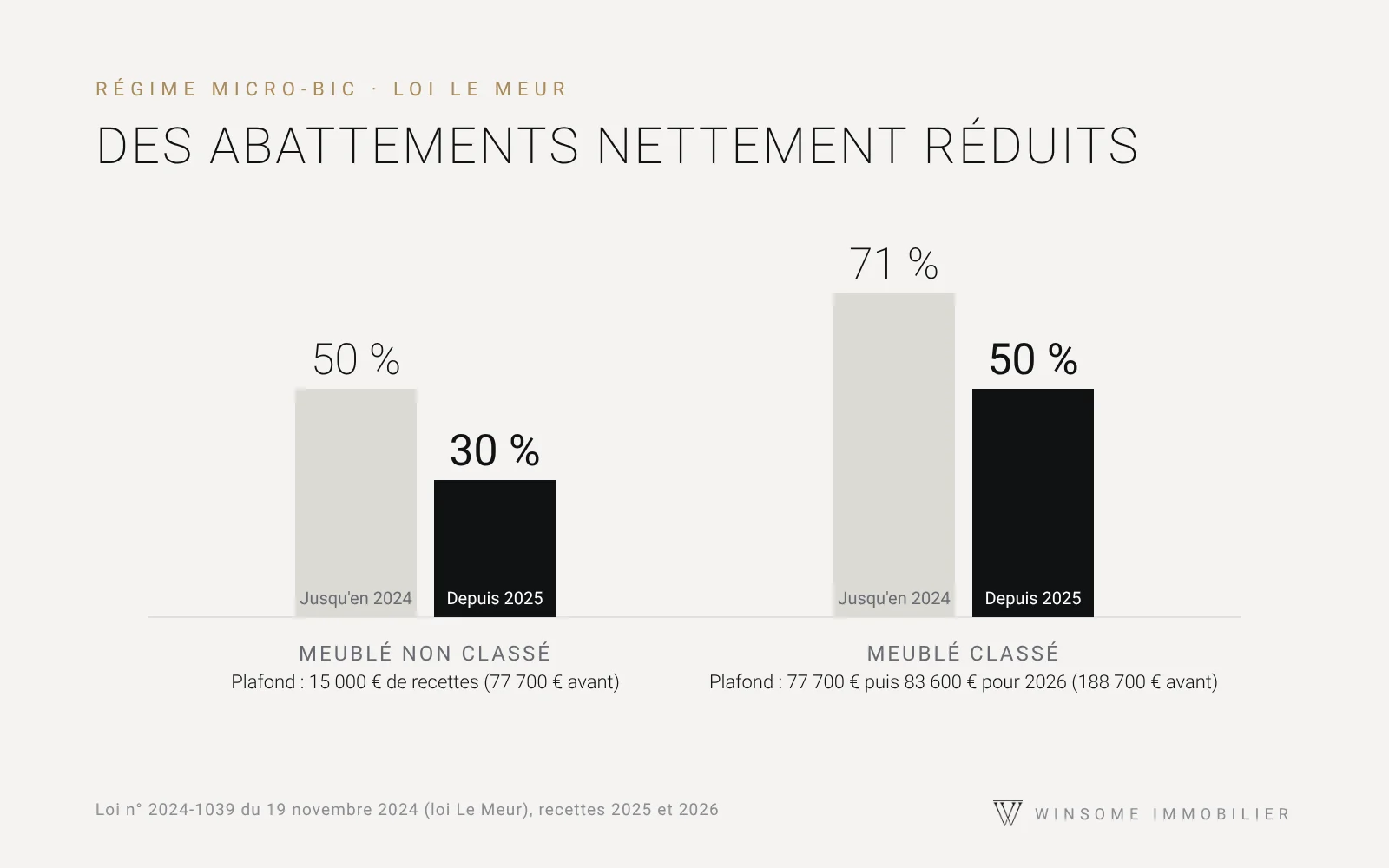
In practical terms, for €14,000 in annual rent, taxable income increases from €7,000 to €9,800 for year unclassified furnished rental. If it is classified, it is only €7,000 . The "furnished tourist accommodation" classification, awarded after year inspection by year accredited body, therefore becomes a real advantage.
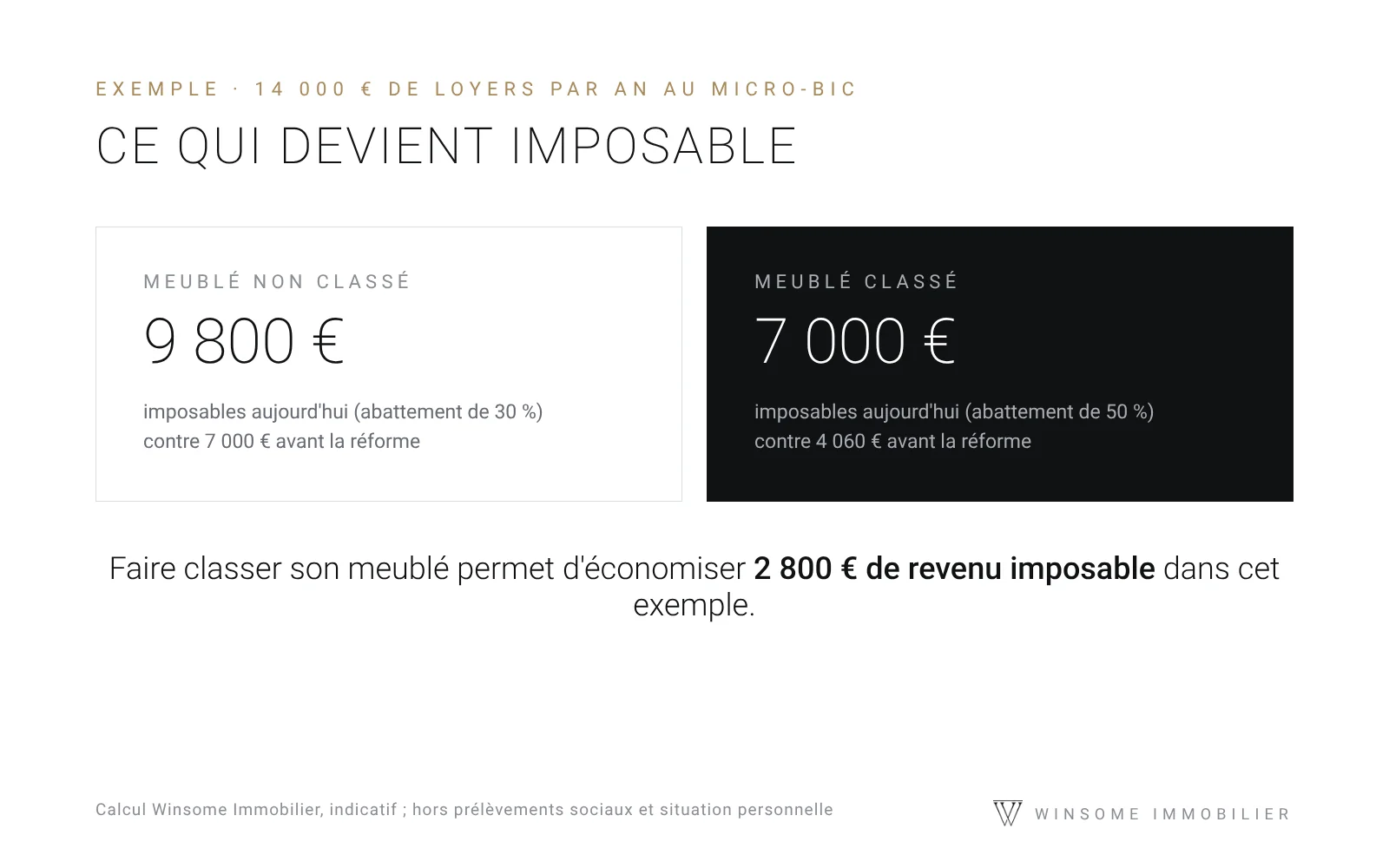
Getting your furnished accommodation classified is now the first decision to make in order to rent it out seasonally under good conditions.
Winsome Immobilier
For rental income exceeding €15,000 for an unclassified furnished property, the actual expense method (with deduction of expenses and depreciation) may be more advantageous. A specialist accountant can help you choose.
The Energy Performance Certificate (EPC) is now included in seasonal rentals.
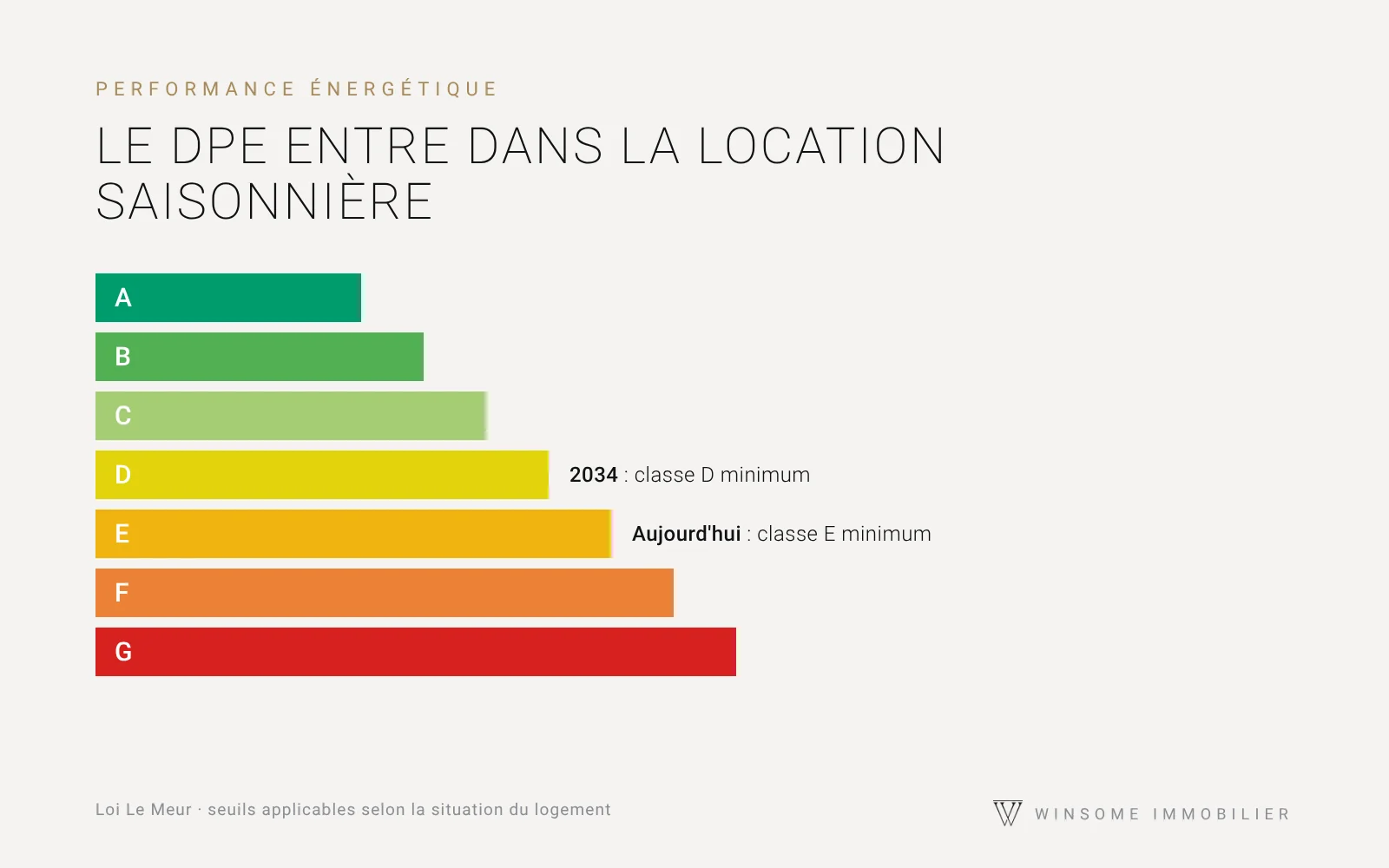
Previously reserved for year-round rentals, the energy performance certificate (EPC) now also applies to furnished tourist accommodations. For properties subject to change-of-use authorization, the Le Meur law mandates a minimum rating of E , then D from 2034. A property rated F or G will therefore need to be renovated to remain available for tourist rental.
Stricter sanctions
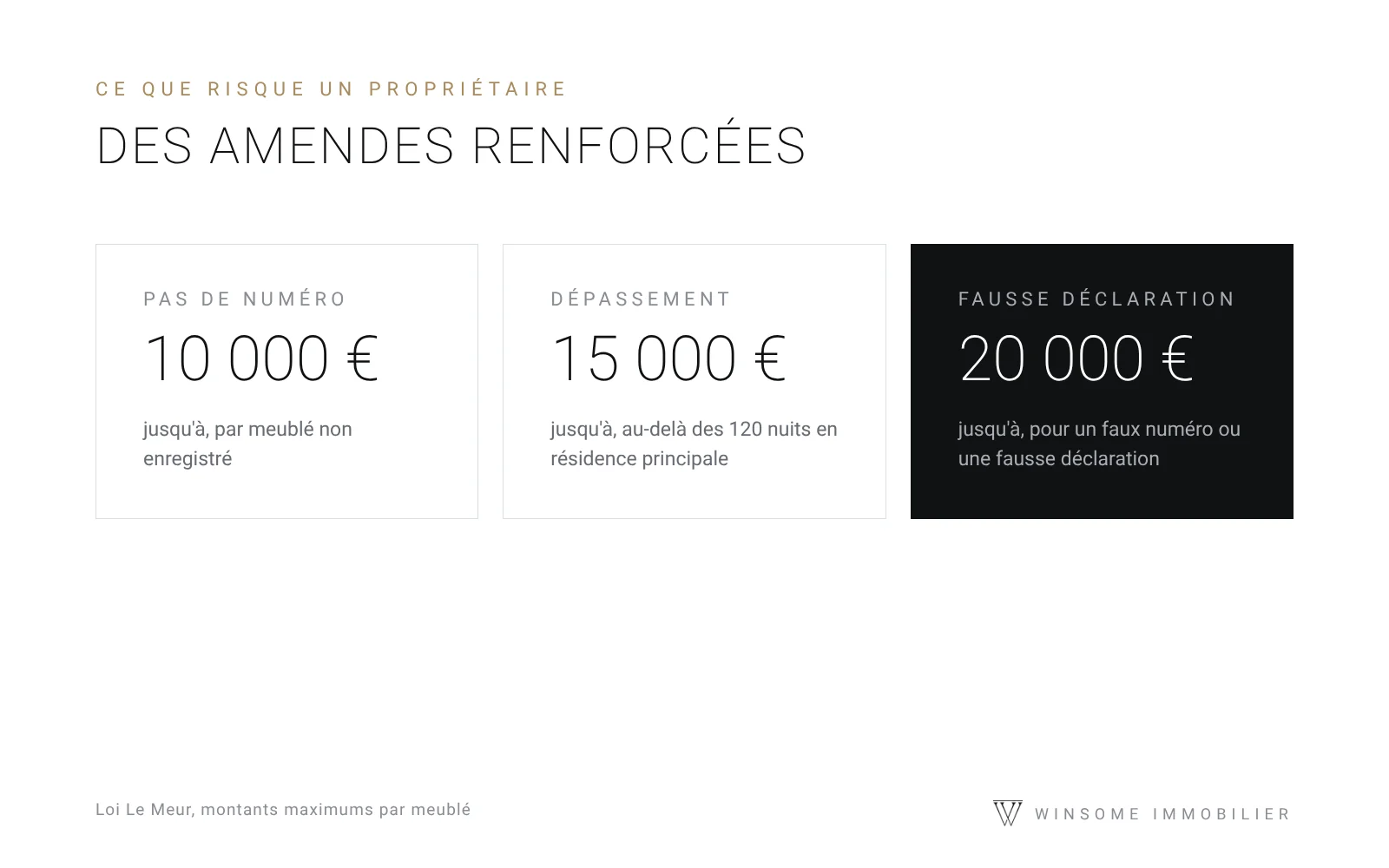
Checks are increasing and fines have been raised: up to €10,000 for year unregistered furnished apartment, €15,000 for exceeding 120 nights for a main residence, and €20,000 for a false declaration or a false number.
120 nights
Annual limit for a primary residence
50 %
Micro-BIC allowance for a classified furnished rental
E → D
Minimum energy performance certificate (DPE) today, then in 2034

Our tips for renting with peace of mind
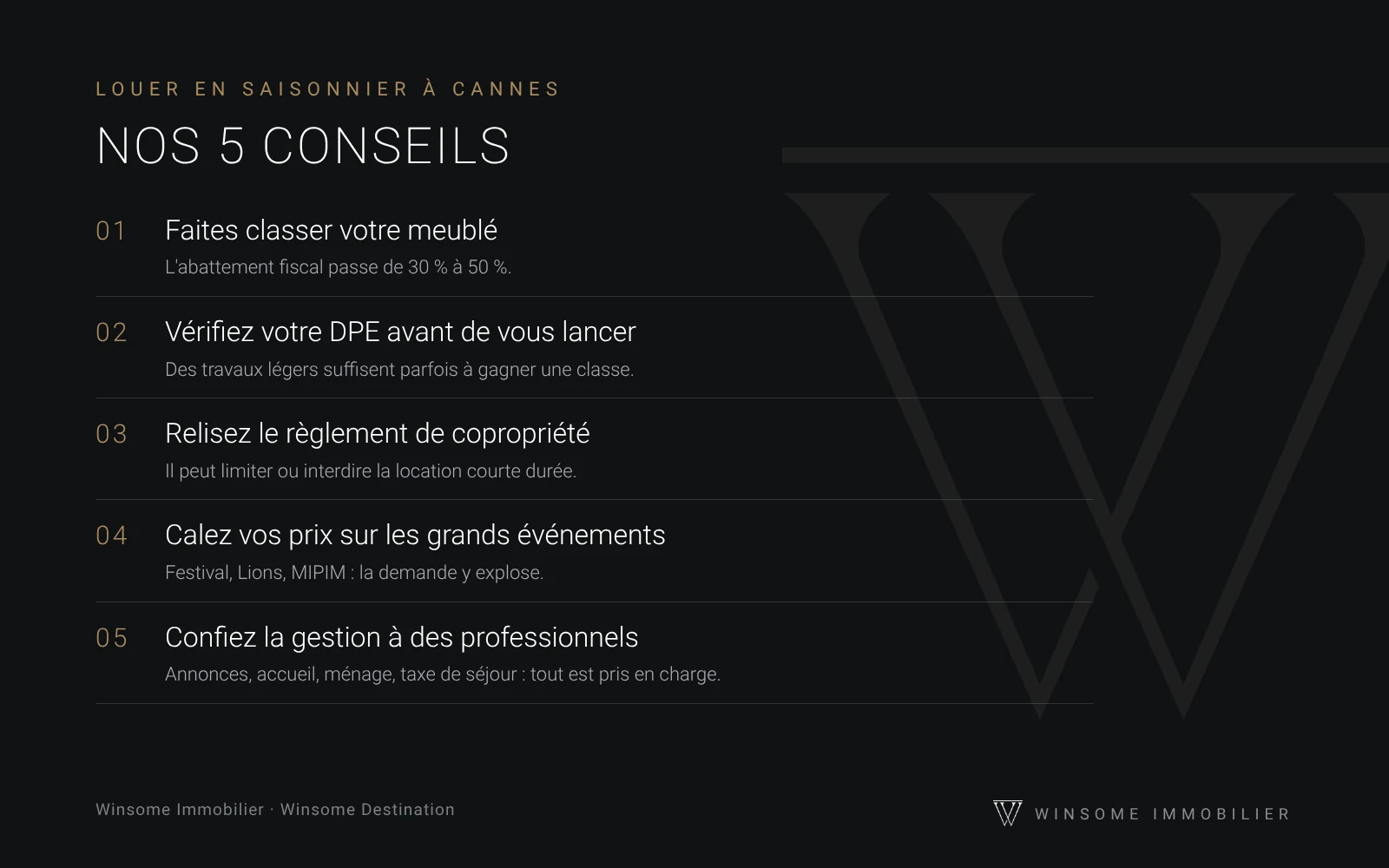
- Get your furnished accommodation classified. The tax allowance increases from 30% to 50%, and the classification reassures travelers.
- Check your energy performance certificate (EPC) before starting. Targeted work (insulation, windows, heating) may be enough to improve your rating by one class.
- Review the condominium regulations. They may limit, or even prohibit, short-term rentals.
- Align your rates with major events. Festivals, Lions, MIPIM, Yachting Festival: these weeks can represent a significant portion of your revenue.
- Entrust the management to professionals. Advertisements, welcoming travelers, cleaning, linen, tourist tax: everything can be taken care of.
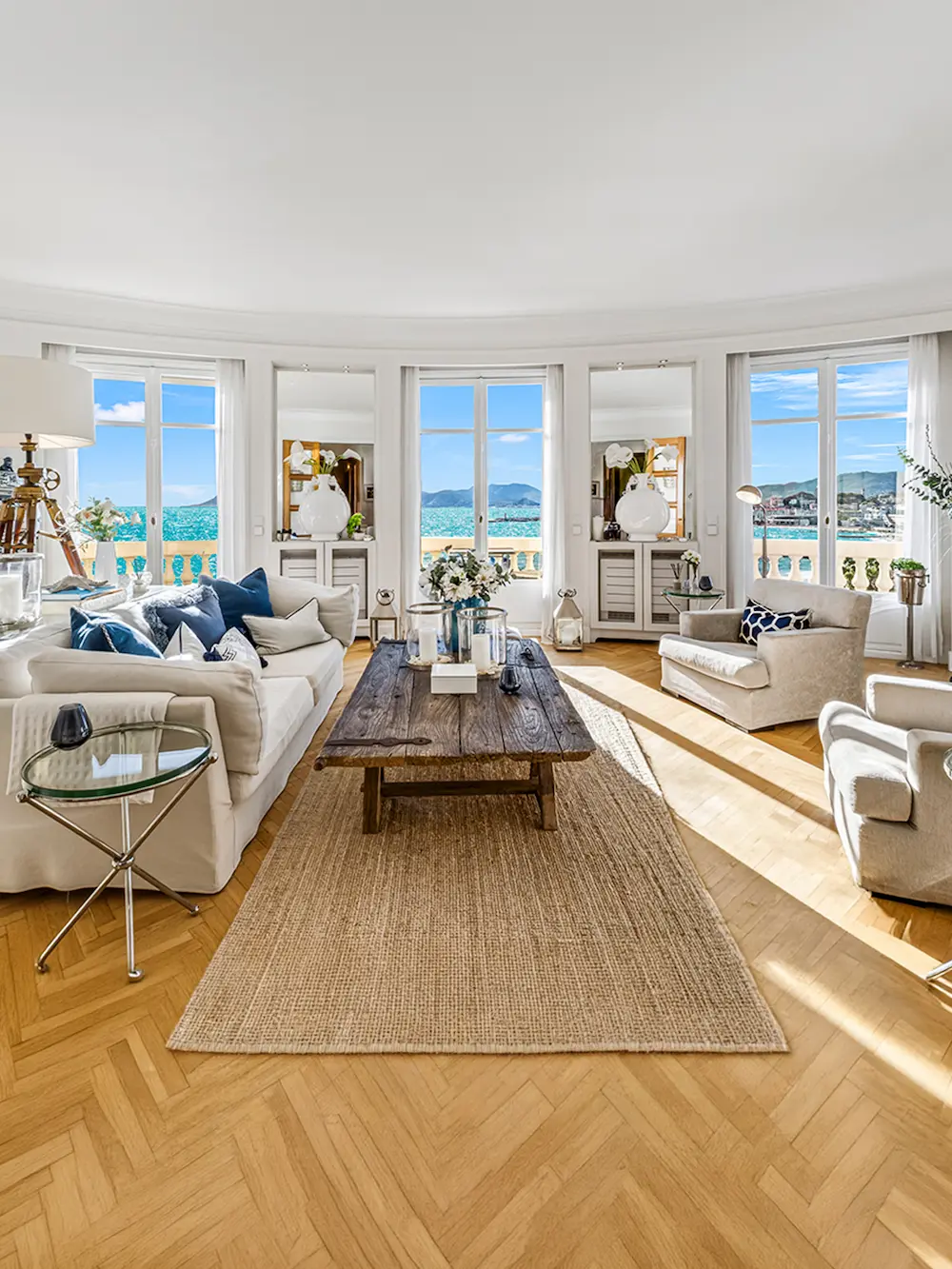


Winsome Destination manages your seasonal rental
With Winsome Destination , our dedicated vacation rental service, Winsome Immobilier takes care of your property from start to finish: showcasing and advertising your listing, managing bookings, welcoming guests, cleaning, linens, and ensuring compliance with regulations. You enjoy the income from your property without the hassle.
Are you wondering how much your property could earn in rental, on a yearly or seasonal basis? Our teams offer you a rental estimate.
Sources: Law No. 2024-1039 of November 19, 2024, known as the Le Meur Law; Tourism Code; City of Cannes (registration of furnished tourist accommodations since June 1, 2018). The rules are subject to change and may vary depending on individual circumstances (primary or secondary residence, co-ownership, change of use): please verify them with the town hall and a tax advisor. The tax examples are indicative only. This article is for informational purposes only and does not constitute personalized legal or tax advice.